Official emergency warning! Common items in Canadian households have extremely high risks! Dozens of fires have occurred this year, and residents have narrowly escaped death
default / 2026-03-05
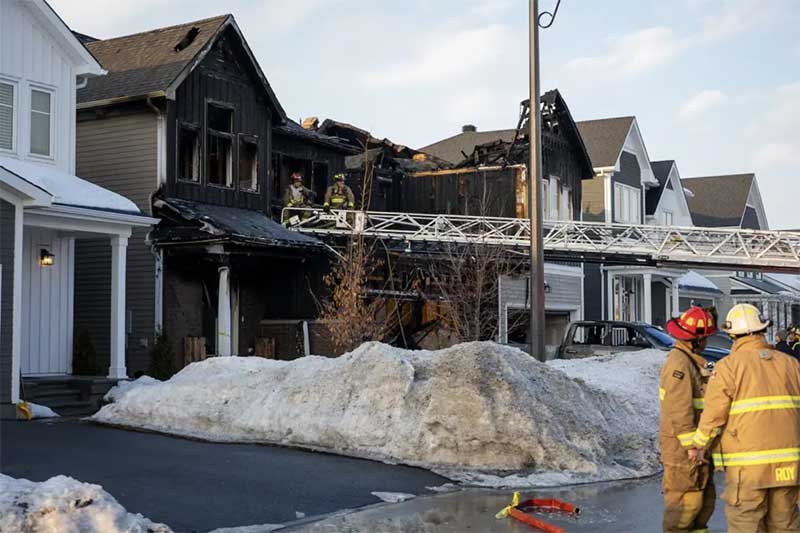
Before 2pm on February 17th, firefighters received multiple reports of a residential area in Richmond Pelham Crescent being engulfed in flames.
At around 3:20 pm, firefighters brought the fire under control. But the fire has spread to neighboring homes, forcing two families to evacuate and causing serious damage to their houses.
After the investigation, it was confirmed that the fire source came from a lithium-ion drill battery that was being charged on the top of the refrigerator in the garage.
In January of this year, a pet dog in Canada bit through a heated ski glove, which caught fire with a similar battery inside.
The continuous events have prompted OFS to issue safety warnings again, emphasizing that lithium-ion battery fires are becoming an increasingly serious risk.
OFS fire officer Leanne Labbee pointed out that there have been at least 60 fire incidents involving lithium-ion batteries in Ottawa since 2022. Lithium ion batteries power almost all devices today, making them the most common type of rechargeable battery in households
To illustrate its prevalence, Labbee once filled a basket of all items in the home that use lithium batteries, including laptops, electric toothbrushes, electric salt and pepper grinders, etc., within 15 minutes.
But although these types of batteries are efficient, they contain highly concentrated energy, which can explode if operated improperly. OFS reminds that the battery should be powered off immediately after being fully charged to avoid overcharging. If there is a hissing sound, swelling, or abnormal odor, it indicates that the battery is on the brink of danger.
The Ontario Fire Chief's Office also reminded through social media not to charge in environments below freezing point, such as cold garages, as it may damage the battery structure and increase the risk of fire.
Labbee pointed out that the concentration of carbon monoxide produced by lithium battery fires is 10 times higher than that of gasoline assisted fires. Due to its unique internal chemical structure, water is difficult to completely extinguish fire sources. It must burn all the internal cells before it will stop
Yaser Abu Lebdeh, who is in charge of the battery materials innovation team at the National Research Council Canada, pointed out that lithium-ion batteries are prone to rapid heating up when tampered with or overcharged.
When the battery cell is damaged, it will release toxic gases and trigger a so-called 'thermal runaway'. This is a self powered chemical chain reaction that can heat up several hundred degrees in a short period of time, ultimately leading to an explosion.
Abu Lebdeh stated that there are currently no completely "safer" alternative products on the market, but new technologies using low combustible materials are approaching commercialization.
According to the Toronto Fire Service, three consecutive lithium battery fires were dealt with within 24 hours. From January 1st to February 23rd this year, there have been 18 related accidents in Toronto, compared to 6 in the same period last year. There were a total of 90 cases in 2025, an increase of 18% compared to the previous year. If compared to 2023, the growth rate will reach 63%. An increase of 210% compared to 2022.
The fire department pointed out that most accidents are related to micro mobility devices such as electric bicycles and electric scooters. Users using non original chargers, purchasing incompatible parts, or charging for extended periods without supervision are common incentives.
From residential garages to apartment units, from ski gloves to electric bicycles, lithium-ion batteries have become deeply integrated into daily life. However, the potential risks associated with its high energy density have also increased with widespread use.
The fire department reminds residents to use original accessories and certified chargers; Avoid overcharging; Do not charge in cold environments or without supervision; If any abnormality is found in the battery, it should be immediately stopped and handled properly.